
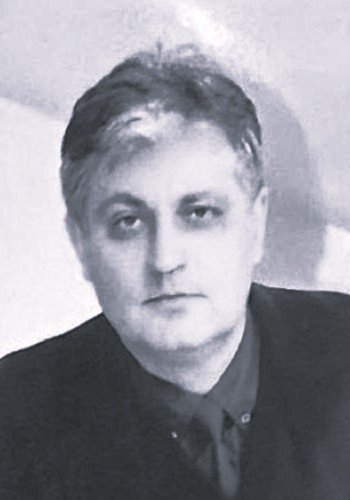
With heavy hearts, we inform you that our dear colleague, Darko Vrbnjak, has passed away suddenly.
Through his kindness, dedicated work, big heart, warm smile, and gracious nature, he left an indelible mark on our theatre—touching generations of children and adult visitors. He will remain forever in the memory of his colleagues, friends, and audience.
A great number of our regular visitors knew ticket seller Darko Vrbnjak well—a man who treated the theatre as his home, always ready to help and talk with everyone who came to the Little Theatre “Duško Radović”.
Entrance to the theatre will never be the same again, for Darko—the man who loved people, animals, and the theatre—will no longer greet children and adults at its doors. We used to jokingly call him our “gentle giant.”
Darko Vrbnjak was born in 1962 in Belgrade. He spent his childhood at the Little Theatre, being the son of the famous puppeteer Janko Vrbnjak.
He studied law, but due to circumstances, began working at the theatre—and stayed there until his untimely passing. He worked as a ticket seller alongside his dear friend, Dulet, and will be deeply missed by all.
Below, you may read an interview with Darko and Dule, titled “Theatre—Market or Second Home”, conducted by dramaturg Đorđe Kosić and published in the brochure 75 Years of Growing Together.
THEATRE — MARKET OR SECOND HOME
DULE: We grew up together; we’ve known each other since we were six years old.
DARKO: Yes, that means 56 years together.
DULE: Since we were six. I make foolish mistakes, and he defends me. Like brothers.
DARKO: Brothers by choice, more than actual brothers. We practically live together—we spend more time here than at home.
DULE: We are diametrically opposite—not in opinion, but in everything. He can’t say anything plainly—he always has to say it beautifully…
DARKO: Indeed, I am a bit complicated.
DULE: You’re not complicated—you’re full of feelings, humanity, and understanding. I’m rough, a jerk—you know?
DARKO: But he, such a rough jerk, when my father died, took me by the hands and said: “You’re not going home now—we’re going for a walk,” because he saw I wasn’t doing well.
DULE: True.
DARKO: My father, Janko Vrbnjak, was one of the people who helped create this theatre; I felt at home here as a child, because he was looked after by many of his colleagues, and there were funny moments too. I remember the late actress Melita Bihali in Pinocchio—she animated and performed him live. I felt jealousy as a child because my father loved Pinocchio so much—I sensed competition and wanted to compete for his affection. After the performance, I told my father I would get him firewood, because he preferred that over me. That is the sensitivity of theatre—a blend of humor and sadness.
DULE: Speaking of humor—one day they called me because a school trip that had booked 150 tickets on the day of the show was canceled. Then some girls called—this was when we were young—and asked, “Is there a chance there are tickets left?” I said, “There are, but you have to run—another group is coming.”
Then they begged: “Could you please take a reservation for three tickets? We’re not asking about the cost.” I replied, “I’d love to, but can’t you hear me whispering? I’m not allowed to take reservations—I could lose my job.” Still, they persisted: “Please, if there’s any way.”
So I said, “Okay, let’s find a solution. You have a sweet voice… Here’s what we’ll do: we won’t mention reservations. I’ll give you a pseudonym: ‘Keleraba.’ I’ll make three tickets under ‘Keleraba.’ When you come, there will be a crowd, but don’t mention reservations—just say ‘Keleraba,’ and I’ll hand them to you, and we’ll all be happy.” “Oh, thank you!” they replied.
And all day long, whoever called, they wanted radishes and different kinds of vegetables. That evening, 15–20 people from the theatre came to watch how I “sold” pseudonyms. A girl appeared, cheerful, and said: “Keleraba.” I pretended not to understand: “Pardon?” She whispered “Keleraba” and smiled. I said, “Surely you’ve made a mistake—this is a theatre, are you looking for the market?” That is theatre.
DARKO: When you come to the theatre, you can be witty, even a bit tongue-in-cheek—but you can also be resolute, for there’s no big money here. What gives satisfaction is your contribution to what’s happening. That truly is the magic of theatre—magic. After a performance, I sometimes make an enthusiastic comment, but I often feel unhappy when things don’t go the way I would like. But I would never presume to say, “This is the way—it’s correct, because—”
DULE: Because you’re young and inexperienced.
DARKO (laughs): Exactly. That’s precisely what I wanted to say. Dušan knows how to put things in their place. If it weren’t that way, this theatre wouldn’t be what it is.