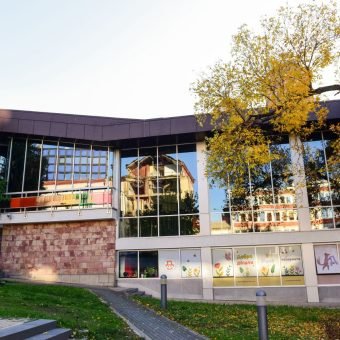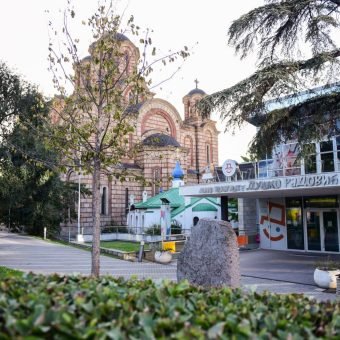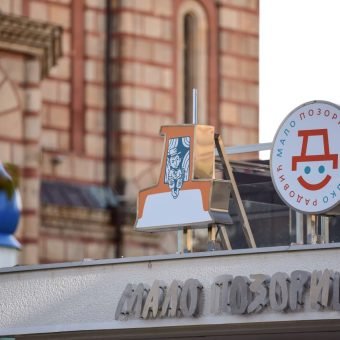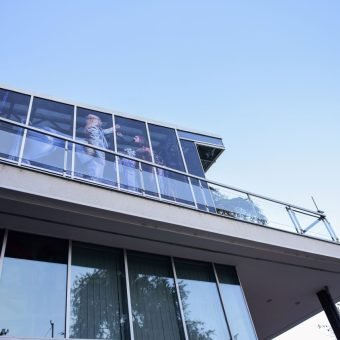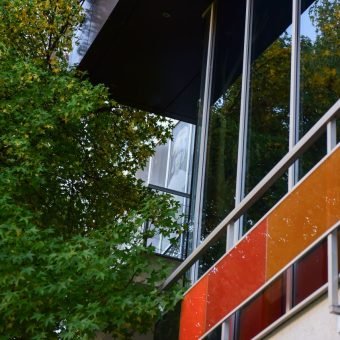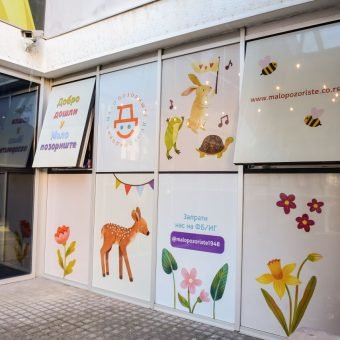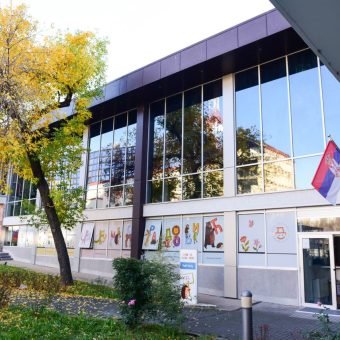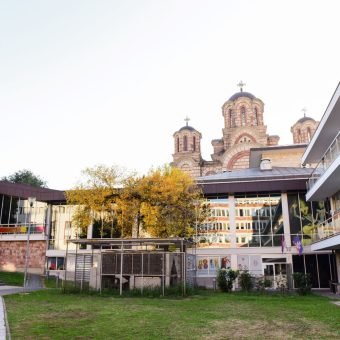
The Little Theatre “Duško Radović” is located in the heart of the green Tašmajdan Park. Surrounded by nature and playgrounds where you can walk, play and enjoy before or after the performance, it draws children and adults into the magical world of theatre.
All ages are welcome here – plays are performed as part of two programmes/scenes and carefully adapted to a specific audience. The Children’s Scene, intended for little ones from the age of 1+, offers magical puppet and drama plays. The Youth Scene offers classics and school reading to its audience, children in the higher grades of primary school and teenagers, but also some contemporary texts that speak to the audience in a more mature way.
As regards the school reading, it is worth saying that we are happy to be visited by schools, because organised visits provide pupils with a unique educational experience of watching the theatrical performances tailored to their needs.
Although we are a little theatre, we have a large field of action and guest performances throughout Serbia and worldwide, so that our plays reach the audience regardless of where they live or what language they speak.
In addition to performances, we also offer the audience an insider’s view of the theatre through our Behind the Scenes programme, which allows the audience to get acquainted with the process of creating a play through organised visits, conversations and workshops.
If you want to know more about the Little Theatre “Duško Radović”, the story of how it was established and developed is full of interesting characters and plot twists (like our plays)! Sounds interesting?
Historical Background
In search of a building (Theatre Without a Theatre)
At its beginning, in May 1948, when the Little Theatre was founded, it had another name: Puppet Theatre of the People’s Republic of Serbia. Božidar Valtrović, a pioneer of puppetry and the initiator of the idea of establishing the first professional puppet theatre in Belgrade, was appointed Theatre Director. The first regulation on the operation of the theatre contained instructions for various positions. For example, janitor/attendant was supposed to be “an agile person with the competences required for performing the duties of his profession”, while cleaning staff “should be persons of good moral qualifications”.
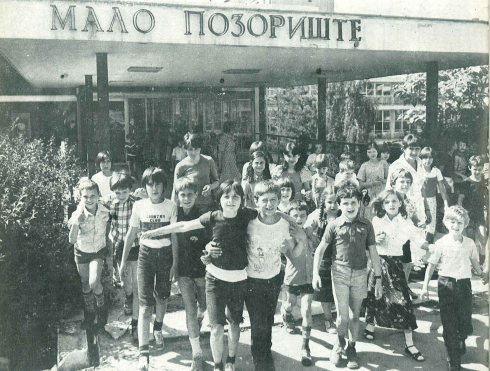
The theatre was officially opened on 23 October 1949 with the premiere of Cinderella by Vladimir Nazor, directed by Predrag Dinulović, held in the hall of the Palace Hotel, which was the first “house” of the theatre. The beginning was not easy: there were no professional staff, puppetry literature in Serbia was almost non-existent, and the working conditions were modest, to say the least. Director Marija Kulundžić describes the premises as follows: “It was the former bar of the Hotel.” The hall was dark, stuffy and cold. In one corner of the proscenium there was a large iron stove, which we were happy about at first, because we could use it to warm our hands and roast some chestnuts, but soon we experienced its disadvantages. When the chimney didn’t pull properly because of the wind, the smoke would come straight back onto the stage. (…) It wasn’t easy for us, but we took comfort in the fact that every beginning is difficult. And we enjoyed it because we had our own puppet theatre.”
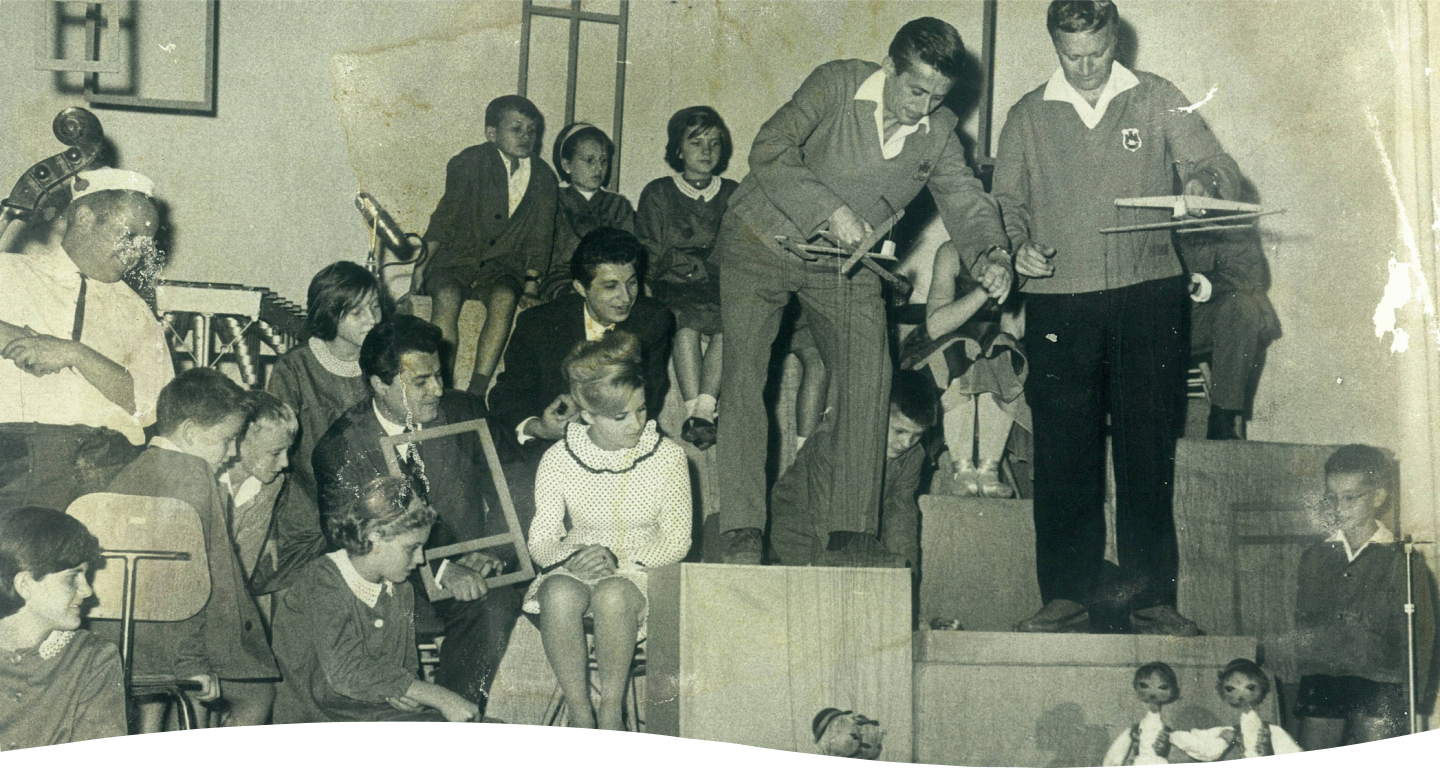
The theatre stayed in this temporary and not too comfortable home for less than three years. In late 1952 it had to leave it, thus remaining without a “roof over its head”. The theatre, which in the meantime changed its name to the Belgrade Puppet Theatre, practically stopped working until it moved into the hall at 45 Terazije on 3 January 1955, which was also a temporary solution, due to its inadequate equipment and unsuitability. Performing only puppet plays, the theatre functioned for a full 13 years!
Theatre in Taš
In 1962, some very significant things happened for the theatre:
1) The Council for Culture of the City of Belgrade made a decision to erect a new building in Tašmajdan Park.
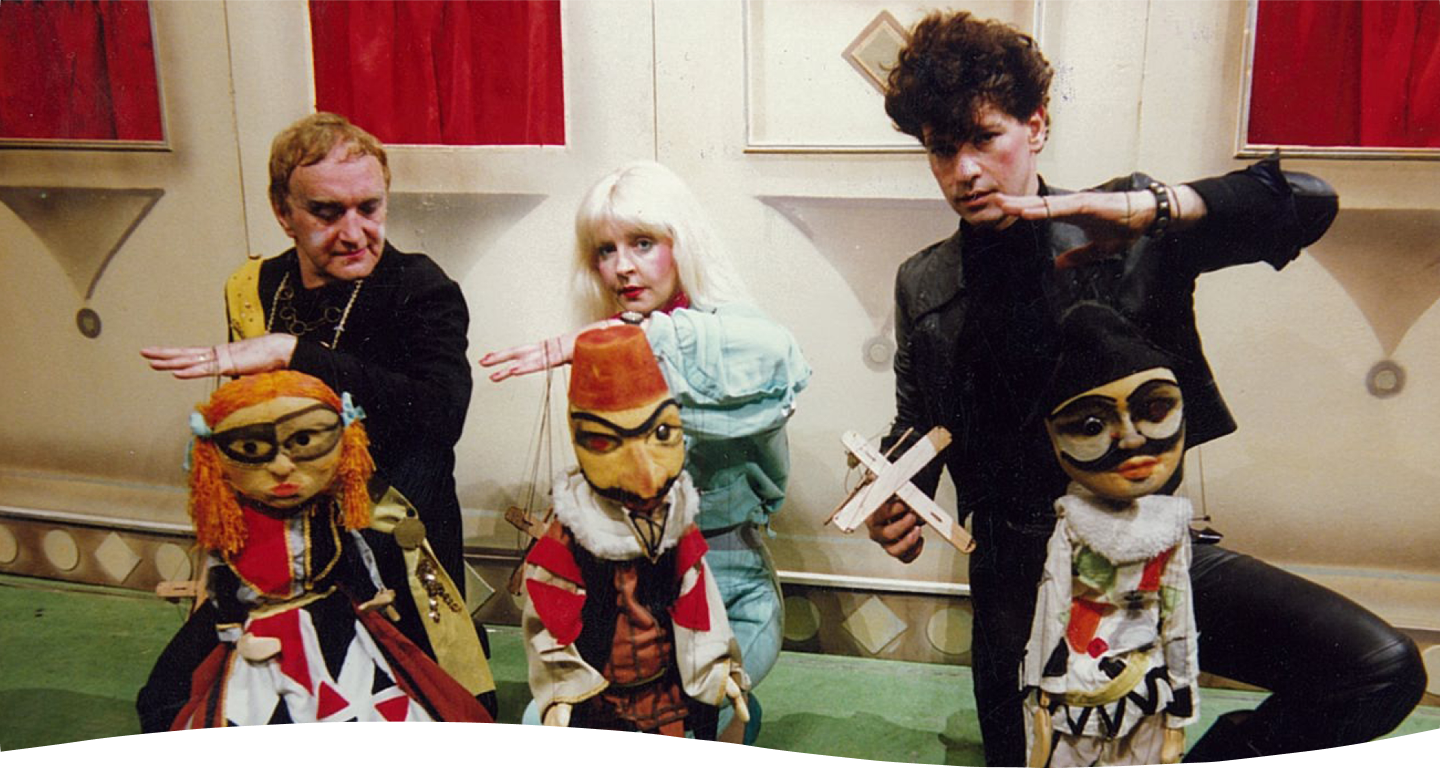
2) The Guignol Scene of Boško Buha Theatre was incorporated in the Belgrade Puppet Theatre (a guignol is a type of puppet controlled by the hand that occupies the interior of the puppet, and differs from a marionette that is controlled by strings). Therefore, all Belgrade puppet artists found themselves under the “same roof”, and the Belgrade Puppet Theatre was born.
The reorganised theatre operated on two permanent stages: the marionette repertoire was performed at Terazije, while guignol performances were shown in the small hall of the Cultural Centre Vuk Karadžić. The once exclusively marionette theatre adopted not only guignol, but also other techniques – javajka (stick puppets), and later also the theatre of masks, the so-called black theatre (physical theatre created with the help of ultraviolet light) and shadow theatre (a type of theatre where actors use shadows to create scenes).
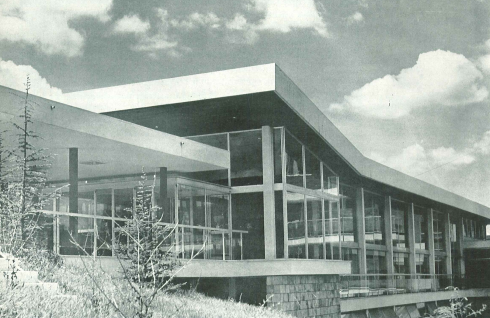
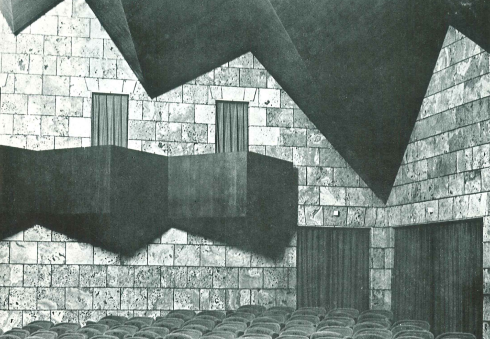
Ivan Antić, a prominent architect, won the competition for designing a new building next to Taš, within the Home of Pioneers complex (to which the Children’s Cultural Centre belongs today). The construction of new theatre lasted from 1963 to 1967.
Who was Ivan Antić?
Ivan Antić is one of the most successful and respected architects of socialist Yugoslavia and post-socialist Serbia. Some of his projects are: Museum of Contemporary Art in New Belgrade (for which he received the Belgrade October Award); Memorial Museum Kragujevac for the Šumarice victims; Sports Centre 25 May on the Danube River; Pinki Hall in Zemun, etc. In addition to the aforementioned work on the theatre building and the Home of Pioneers, Antić also participated in the design of the RTV Belgrade building.
During the construction of a new house in Tašmajdan, the Belgrade Puppet Theatre got a new name: it officially became the Little Theatre on 28 December 1967. This is how Prof. Jan Malik, Secretary General of UNIMA (Union Internationale de la Marionnette) speaks about the choice of the name in the monograph published on the occasion of the 20th anniversary of the theatre:
“It’s endearing because it sounds modest, without pathos, without coquetry, without exaggeration or megalomania. And at the same time, that unpretentious name is very binding. (…) The audience expects this little theatre to give them a big experience. (…) The Belgrade LITTLE THEATRE fulfils this expectation.”
A diverse repertoire of plays until the end of the sixties offered a great experience. Some of the best plays were: Dragutin Dobričanin’s Nothing Like The Craft, directed by Soja Jovanović; Dragan Lukić’s Fifi the Star, directed by Živomir Joković; Valentin Andrijević’s Old Grandpa, directed by Srboljub Stanković; Letter by Letter, based on the poetry of Dušan Radović, directed by Vera Belogrlić (who also directed a very successful eponymous TV show and the play also features Mića Tatić from the TV show, with the famous puppet Aćim); Aleksandar Popović’s Pardon, a Parade Runner, directed by Srboljub Stanković. During this period, the theatre toured numerous cities throughout the former Yugoslavia, and was also in Warsaw with the plays Tales from the Sea, Our Games and Ćira 2.
In addition to Božidar Valtrović, the first manager, in this period the theatre was managed by Milutin Ćirić, followed by Majo Đurović.
Once upon a time there was a Dušan Radović
The Little Theatre was officially opened on 6 June 1968. The first performance in the new building was the puppet play Our Games, directed and choreographed by Jelen Beložanski, presenting a mix of folk dances originating from Macedonia to Slovenia. The ceremony was opened by children’s writer Branko Ćopić. The opening of the new building echoed in the press throughout Yugoslavia at the time. Finally, the theatre was provided with the conditions to show its full glory, and in the following years it became an increasingly popular place for both children and adults. Dušan Radović was among them. He left a testimony of his high opinion of the Little Theatre in a monograph published on the occasion of the theatre’s 30th anniversary.
Duško Radović: “The next 30 years”
“The audience of the first performances of the Little Theatre could already have grandchildren. Indeed, much time has passed and much evidence has accumulated against the youth of all those who remember the beginnings. (…)
I think or dream about what I would do if I had that opportunity, if I had this mind and that age. If I were at the beginning and not at the end. If the fate of the Little Theatre in the next thirty years depended on me.
I would believe a lot in the cultural and pedagogical mission of puppetry. As if there was nothing more important or beautiful.(…) (…) I would learn from the old and the good how to be better than them. Both in ambitions and results. (…) I would try to get to know children even better. (…) I would dream a lot and constantly try to discover new possibilities for the poetic dimensions of performances. I would believe that there is no limit to that.I would do my best and I would be sorry that I cannot do more. I would be a little satisfied and a little jealous of those who will be able to do it.”
A few years later, Duško Radović passed away, and the Little Theatre immediately submitted a request to change its name, i.e. to supplement it, which happened on 23 October 1984, in honour of Duško and his literary legacy. In the period until the end of the 1970s, the theatre had an average of 4 premieres and 400 performances per year. It maintained cooperation with the puppet theatres from Croatia, Bosnia and Slovenia, as well as the theatres Gulliver from Warsaw and the Skazki State Puppet Theatre from Saint Petersburg. The theatre also performed in the major European theatrical centres such as Łódź, Katowice, Bratislava, Bucharest, and Sofia. Some of the best performances were: Thumbelina based on Andersen’s classic and directed by Marija Kulundžić; Nopeville by the Polish writer Zbigniew Poprawski, directed by the Polish guest director Jan Potishil; Fantasia based on the text and directed by Slovak director Bohdan Slavik; Jumping Ball by Malik Jan directed by Marija Kulundžić; Bogeywoman by Ljubivoj Ršumović directed by Soja Jovanović; Likes and Dislikes by Jovan Sterija Popović directed by Radoslav Lazić; Charlie’s Fate by Aca Popović directed by Branslav Kravljanac (the music was composed, as for many other successful plays of the Little Theatre, by composer Zoran Hristić), Aska and the Wolf by Ivo Andrić directed by Dragomir Jović, etc. During this period, the theatre was run by a puppeteer and Acting Manager Janko Vrbnjak, who was followed by Dušan Rodić.
Three scenes in one “little” theatre
In the 1980s, there was already a coexistence of puppets and live actors on stage and the repertoire was very diverse: puppet shows, monodramas, ballets, musicals, etc. Primož Bebler (Manager as of 1 December 1984), a man of enormous theatrical energy and culture, gathered artists around three different scenes: the Children’s Puppet Scene, the Children’s Drama Scene and the Evening Scene Radović (opened in 1986 with the play “Mystery… Belgrade” directed by Ivana Vujić), which worked for years in parallel on the same stage. All performances were prepared in the same space. It was common to perform two to three plays, sometimes four, and hold two to three rehearsals every day. The restaurant and club with the popular terrace (which “left” the theatre as late as in 2007) certainly contributed to the “dynamic” everyday life of the theatre.
In this period, both classics and contemporary writers, domestic and foreign, were performed: Nušić, Vitezović, D. Mihailović, Bulgakov, Havel, Bora Đorđević, Radović, Mrožek, Andrić, Bukovski, Machiavelli, Domanović, etc. Some of the highlights include the plays The Humpbacked Horse by Petar Pavlovich Jershov directed by Yuri Eliseev; The Naughty Puppet (based on Carlo Collodi’s Pinocchio) directed by Marija Kulundžić; Snow White and Seven Imported Dwarves by Aca Popović, and Zoran Popović’s Two Grandmas and Three Frogs, both directed by Slobodanka Aleksić; Aca Popović’s Goat Skinned-Alive, as well as Mladen Milićević’s A Tense Show, both directed by Dubravko Bibanović; The Little Prince adapted by Branislav Kravljanac and directed by Davor Mladinov, etc.
War...and reconstruction
The 1990s were marked by the war, but also by the reconstruction of the Little Theatre Duško Radović. The general impoverishment forced the theatre to choose between the children’s scene and the evening scene, and they opted for the children’s scene. Managers Stevan Koprivica and his successor Miroslav Aleksić tried to make the theatre work as well as possible even in the wartime circumstances.
During the NATO air strikes, the Little Theatre Duško Radović worked intensively outdoors on the “relocated stage” in Tašmajdan Park. The statistics show that there were forty free performances per month, including free guest performances in the Belgrade City Municipalities. Despite the state of war, two premieres took place even in the theatre building.
In the meantime, Radović became a true victim of “external aggression” and the only Belgrade theatre that suffered “collateral damage” during the NATO bombing. The city authorities helped with the reconstruction, but the actors also found themselves in the new roles of bricklayers and painters. Večernje novosti wrote: “The second season in a row, the employees of the Little Theatre Duško Radović spend the summer without vacation, working between performances, on Saturdays and Sundays, and even at night.”
Thanks to the joint work of staff, the Little Theatre was ready to begin the 52nd season.
During this turbulent decade, there were award-winning plays: Head of Steel (Baš Čelik) by Igor Bojović and Lucky Luke and the Daltons by Stevan Koprivica directed by Milan Karadžić; Beauty and the Beast by Srboljub Stanković (director and text); The Little Match Girl by Hans Christian Andersen, directed by Tatjana Stanković; Two Coasts by Vladimir Andrić (director and text), etc.
The New Millennium
In the 2000s, Managers Maša Stokić and her successor Anja Suša prepared the theatre for a thorough reconstruction. Architect Ivan Antić, the creator of the original design, got involved in the works, but had to give up due to health issues. The theatre was moved to New Belgrade, and in 2012, the reconstruction of the theatre building began, which repaired the damage, but also created another stage with movable seating in the main hall. This provided additional space for the needs of the theatre, which in the first decade of the new millennium finally got its Youth Scene, and also staged the first play for babies. After the completion of the reconstruction in 2014, the theatre returned to its old place in Tašmajdan, where it still welcomes the audience of all ages with open arms.
The 2000s are the years when the Little Theatre Duško Radović simultaneously created plays for children and for young people on the Evening Scene. Its innovative repertoire policy led to numerous successful plays, guest performances and awards. To name just a few: Once Upon Time There was a Lion by Duško Radović directed by Tatjana Stanković; Wyrd Sisters by Terry Pratchett directed by Kokan Mladenović; The World of A Flower, directed and written by Tatjana Stanković; You are Lying, Melita Ivan Kušan/Sena Đorović directed by Bojan Đorđev, Andersen’s Cooks by Dragoslav Todorović (text and direction), etc.
The theatre performed the plays in the main programme of BITEF: No name: Snow White by Robert Walser, directed by Bojan Đorđev; as well as in the showcase programme: One step farther, one step closer ( Bojana Mladenović and Dušan Murić), Jean-Luc Lagars: The Very End of the World (directed by Vlatko Ilić) – awarded at the Sterija Theatre Festival), Andreea Valean: Kiki and Bozo (Nikola Zavišić); Milan Marković: Good Morning, Mr. Bunny (Jelena Bogavac); Matias Anderson: Runner (Stevan Bodroža).
The ensemble travelled to Russia, Iran, Germany, Turkey, Japan, South Korea with the plays Andersen’s Cooks, The World of A Flower, The Petrified Prince (directed by Mark van der Velden); Dalija Aćin Thelander, Maja Pelević: The Book of Wanderings (Dalija Aćin); Falk Richter: God is a DJ (Miloš Lolić)…
The Little Theatre participated in the Biennial of Stage Design and received the main prizes for the creative teams of the plays Peter Pan, The Little Mermaid, The World of A Flower, Andersen’s Cooks, Momo and Good Morning, Mr. Bunny!
The 2010s and Theatre Managers (Acting Manager Damjan Kecojević, Acting Manager Bojan Lazarov, Manager Aleksandar Rodić, and Manager Aleksandar Nikolić), gradually shifted the repertoire focus on the Children’s Scene. Among the most important are these plays: Some Very Important Things by Dalija Aćin (text, choreography, direction); Five Boys by Simona Semenič/Minja Bogavac directed by Ana Grigorović; Mario & Nette Circus by Milena Depolo directed by Dragoslav Todorović, Ivo Andrić’s Aska and the Wolf adapted and directed by Tatjana Piper Stanković.
Playwrights and directors are often mentioned in historical texts, and we usually forget the other, equally important ones who maintained the vitality of a theatre. That is why we must not forget the pioneers of the marionette scene, artists/performers who carried the repertoire of the Little Theatre devotedly for a long time at the very beginning, such as Janko Vrbnjak, Milorad Gagić and Zoran Sretenović; playwrights such as Branislav Kravljanac, composers such as Zoran Hristić, numerous creators of puppets, costumes, scene… the mentioned names are only few among many! Unfortunately for this short historical overview and fortunately for the Little Theatre, so many dedicated artists have entered its doors that it is impossible to list all of them without forgetting someone. Nevertheless, all of them left their mark in the rich history of this theatre, making it one of the most important children’s theatres in Serbia.
Gallery